The Mathematics of Memecoins
What if the same logic that governs flower petals, galaxy spirals, and ocean waves also ruled the memecoin market? Discover how the Fibonacci sequence reveals hidden patterns in the apparent chaos of cryptocurrencies.
Discover
The Origin
Leonardo Pisano Bigollo, known as Fibonacci, was born around 1170 in Pisa, Italy. Son of an Italian merchant, he spent his youth in North Africa, where he encountered the Hindu-Arabic numeral system that would revolutionize Western mathematics. In 1202, he published the Liber Abaci, a treatise that introduced Arabic numerals to Europe and presented to the world the sequence that would immortalize his name.
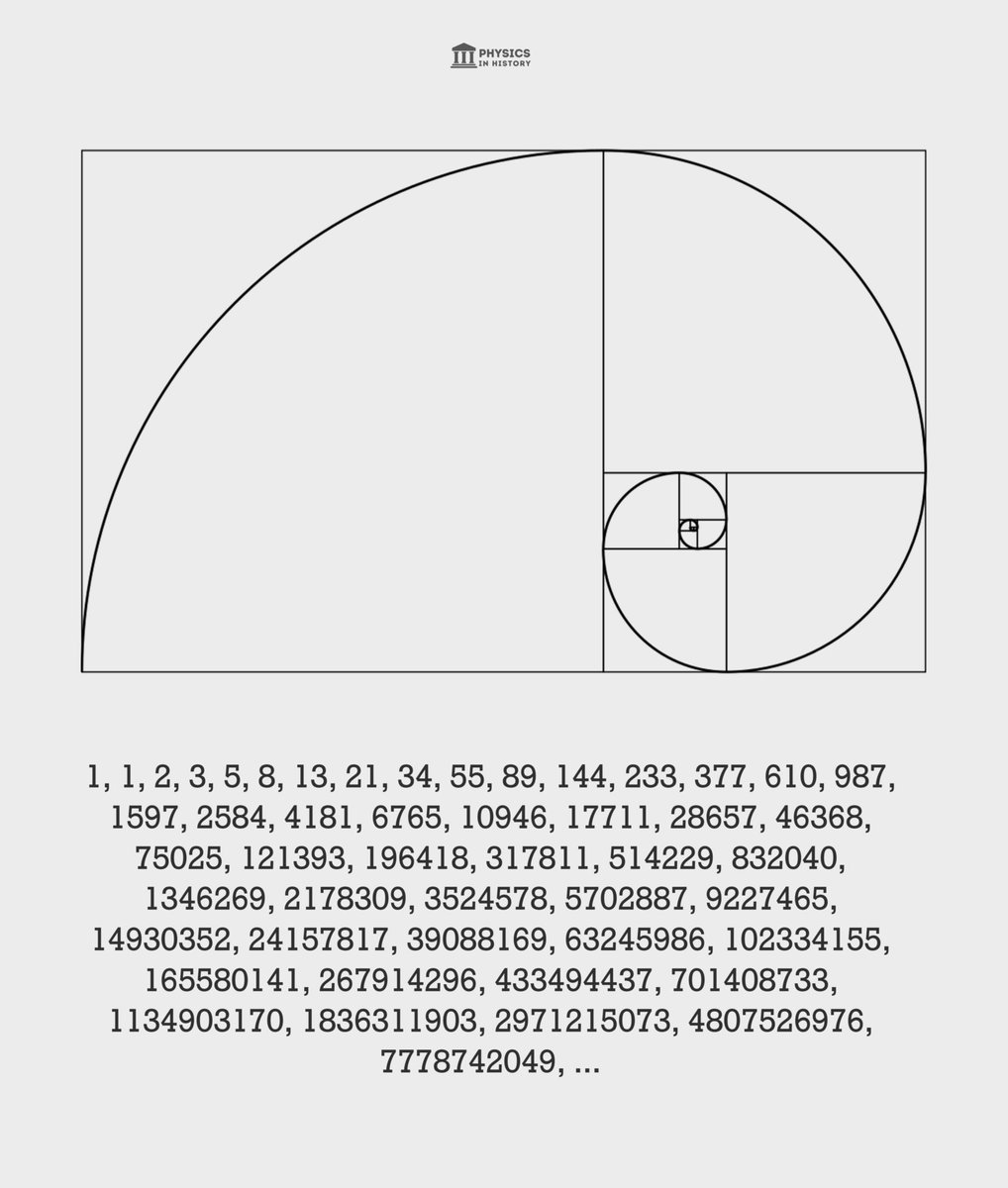
Fibonacci posed a question: how many pairs of rabbits will exist after one year, if each pair produces a new pair every month, starting to reproduce after one month of life? The answer revealed a sequence where each number is the sum of the two preceding ones.
Imagine Leonardo of Pisa observing the memecoin market in 2024. He would recognize familiar patterns: cycles of exponential growth, retracement levels that respect golden proportions, and adoption waves that follow mathematical progressions. The sharpest traders have already discovered this ancient secret — the Fibonacci levels of 23.6%, 38.2%, 50%, 61.8%, and 78.6% function as invisible guides in the apparent chaos of the crypto market.
In the memecoin universe, the Fibonacci sequence is not just mathematics — it is prophecy. Every pump follows the golden spiral, every correction finds support at sacred levels. Communities grow like Fibonacci's rabbits: slowly at first, then explosively. What appears random to the casual observer reveals itself, to trained eyes, as a cosmic dance governed by numbers discovered eight centuries ago in the streets of Pisa.
Applications
Fibonacci retracement levels (23.6%, 38.2%, 61.8%) function as invisible barriers where memecoin prices frequently find support during corrections. Experienced traders use these points to identify buying zones.
When a memecoin breaks its all-time high, Fibonacci extensions (161.8%, 261.8%, 423.6%) project the next price targets. Many tokens hit exactly these levels before correcting.
Cryptocurrency market cycles frequently respect Fibonacci intervals in days: 8, 13, 21, 34, 55. Major movements tend to occur at these time markers, allowing strategic anticipation.
The holder growth of successful memecoins frequently follows a curve that mirrors the Fibonacci sequence. Virality has its own mathematics, and it speaks the language of Leonardo of Pisa.
Elliott Wave theory, based on Fibonacci, predicts that markets move in 5 impulse waves and 3 corrective waves. In the memecoin market, identifying which wave we are in is crucial for perfect timing.
Memecoin traders apply the golden ratio (1.618) to set profit targets. If a coin has risen 100%, the next natural target is 161.8%. This millennial proportion continues to govern human behavior in modern markets.
"Geometry has two great treasures: one is the theorem of Pythagoras; the other is the division of a line into extreme and mean ratio. The first may be compared to a measure of gold; the second we may name a precious jewel."
Hall of Fame


The Mathematics
F(n) = F(n-1) + F(n-2)
The recursive formula defines each term as the sum of the two preceding ones, starting with F(0) = 0 and F(1) = 1. This simplicity hides an infinite complexity that connects seemingly random numbers into a universal pattern — the same pattern that, eight centuries later, memecoin traders use to predict market movements.
1.6180339887...
The ratio between consecutive Fibonacci numbers converges to phi, the golden ratio. An irrational number that appears where we least expect it — from galaxies to memecoin charts — and defines what we instinctively consider beautiful and harmonious.